Way InThe read
The answer on one page. Then the working.
A read arrives as a private, signed-in site for your organisation. It opens on the verdict, and every view after that shows how the verdict was reached.
The views / shown with an invented account
The brief
The answer first.
The brief opens on a verdict you could say out loud in a meeting. Under it sit the turning word that explains the account and the next three moves.
The gaps box is in the top right of every view. It says what is unknown, what is judgement and what you need to confirm, so nobody is surprised later.
The answer
Go in through IT and finance together. Two doors are open and the finance chief is four weeks into the job.
- Two routes rest on a public reaction. Your side confirms them.
- Influence scores are our call.
- Nobody has ground with the Chief Executive.
The target already runs an older version of what you sell.4
The connection map
Who knows whom, and how well.
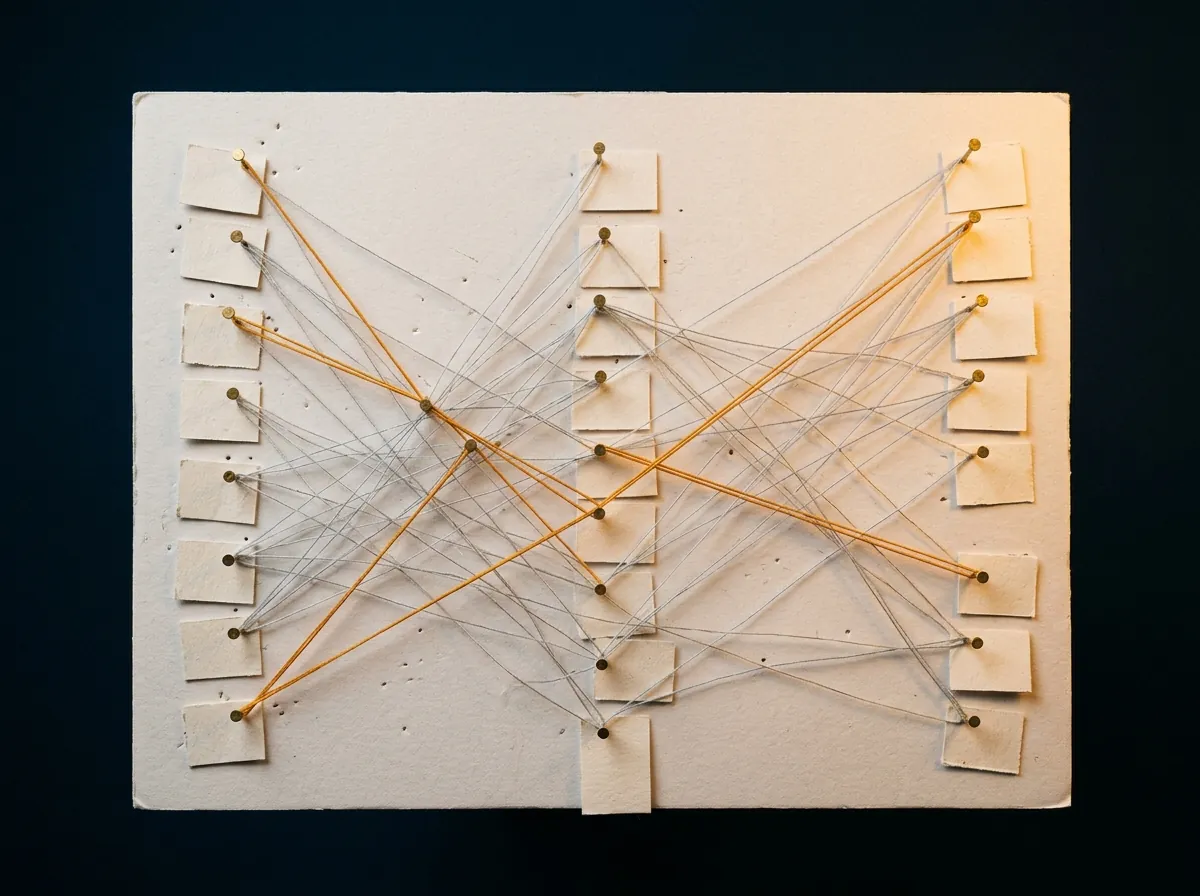
Three columns: your side, the ground you share and the target by floor. Each route carries a grade and the reason for it, and each box stays one line until it sits on the route you have picked.
The power map
Who decides, against how open the door is.
The people with the most say often sit behind the doors that are hardest to open. The power map puts both on one chart, so you can see where to start this week and where the long work is.
People
A dossier on every person.
Role, start date and career. The subjects they return to in public. The best channel, the best messenger and the best moment. The door score sits at the top with its sums showing.
Dossier / door ajar / score 65
Daniel Reyes
Chief Financial Officer. New in role.7
- GroundYour finance director reacted to his appointment post. A tie exists. How strong is for your side to say.12
- Talks aboutWorking capital, depot costs and paying suppliers on time.9
- MessengerYour finance director, peer to peer.
- WhenBefore his first budget round closes.
Plays
A play for each function.
Finance hears a finance argument and operations hears an operations one. Each play leads with words the target has published, then sets out the problem, your answer, the proof and the objections to expect.
Play / operations
“We will take a day out of every delivery by 2028.”15
- The problem
- Eleven depots plan their loads on three different systems.
- Your answer
- One plan across all of them, on the platform IT already runs.
- The proof
- A customer you share did it in two quarters.18
- They will say
- “We tried this in 2022.” The answer is in the play.
How to get in
A dated plan, first messages and a board paper.
Every move in the plan names a sender, a channel and a date. First messages are drafted for your people to send under your own rules.
The board paper outline is for the person inside the account who will argue your case when you are out of the room.
The plan
- This weekOpen the IT door. Your head of customer success writes to the Chief Information Officer, an old colleague.
- Week twoConfirm two routes. Your account director and finance director say how well they know their contacts.
- Week fourFinance, peer to peer. Your finance director to theirs, before the budget round closes.
- LaterThe Chief Executive. No route yet. She hears about you from her own team first.
Signals and evidence
What changed, who is circling and where it all came from.
What has changed at the account, what similar companies run and which firms are already circling. Rival firms are named and their salespeople are left out.
Every claim in the read points to a numbered source with the date it was read.

How it arrives
A private site for your organisation.
Each client has its own address and its own sign-in: an organisation code and a shared password, then a pass that lasts 30 days on that device. The pages and the data behind them sit behind the same door.
The site takes your colours, so it looks like yours when you share a screen. The brief copies or downloads in one click for the people who will never sign in.